
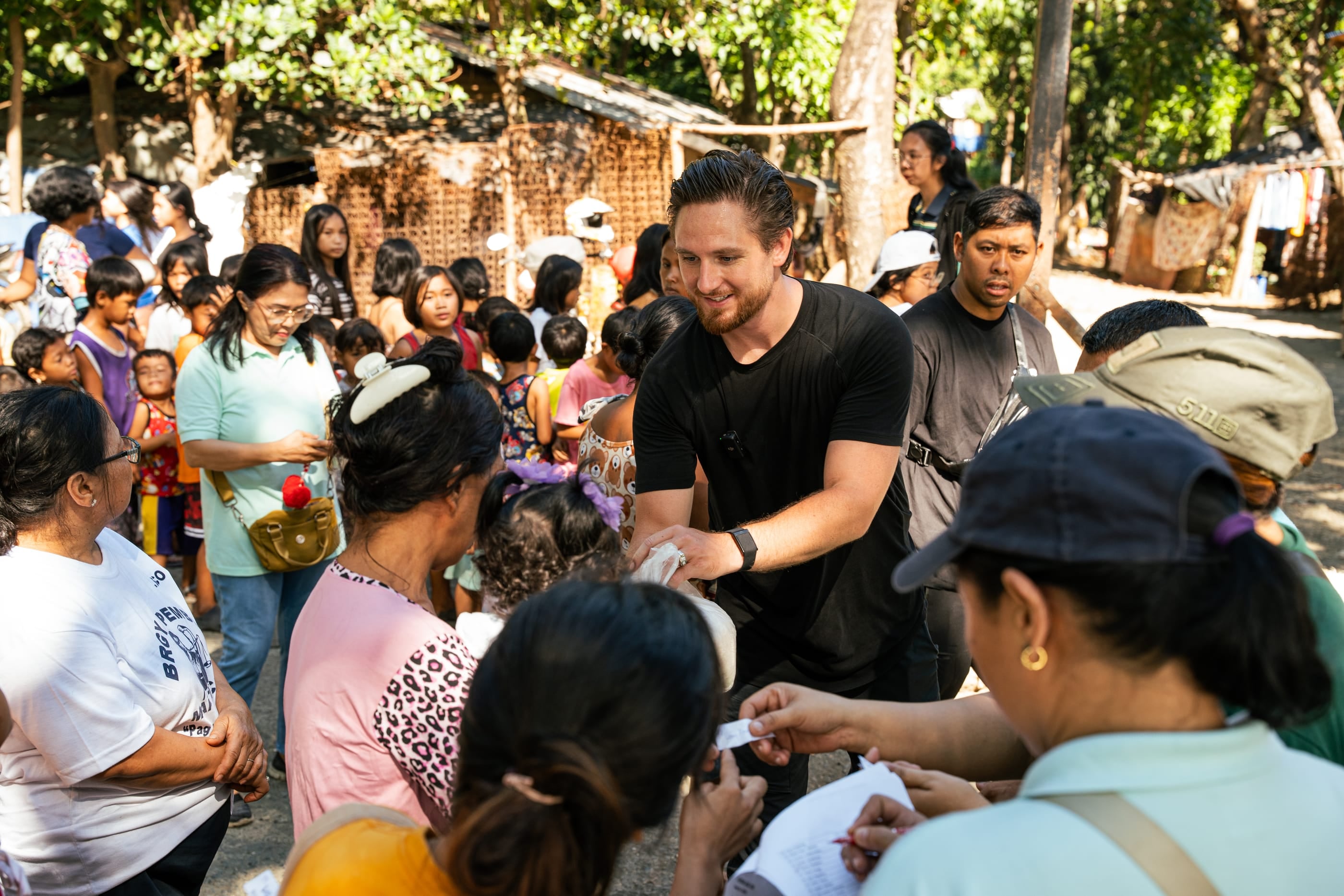
A letter from our founder
There are moments in life that impact you so deeply, they convict you to action.
It began in the deep mountains of the Philippines, where I met a woman who had walked 20 kilometers to receive a single bag of rice. When she held it, she wept with relief. That bag of rice meant her family would not go hungry that night, and that her children, who were chronically malnourished, would eat a meal that gave them strength for one more day.
That moment changed my life. Forever.
Across Asia, roughly 323 million people live with the daily uncertainty of whether there will be enough food. Yet hunger is not simply a shortage of food. It is a failure of access, distribution, infrastructure, and opportunity. Right now, as you are reading this, millions of children are battling stomach pain, stunted growth, weakness, and disease: conditions they cannot overcome simply because they lack proper nutrition.
Feeding Asia exists to end this suffering and to restore their future.
Feeding Asia provides immediate relief through family feeding, village distributions, school programs, and agricultural infrastructure. But our vision goes much further: through local distribution centers, sustainable agriculture, and community-led development, we are building a future where families no longer depend on emergency aid, but are equipped to be self-sustained.
Our goal is ambitious: to end hunger in Asia in our lifetime.
We invite you to build that future with us and give millions of people the opportunity to change their story.
Jack Jensz Jr.Founder, Feeding Asia
He didn't go to Asia to visit.He went to stay.
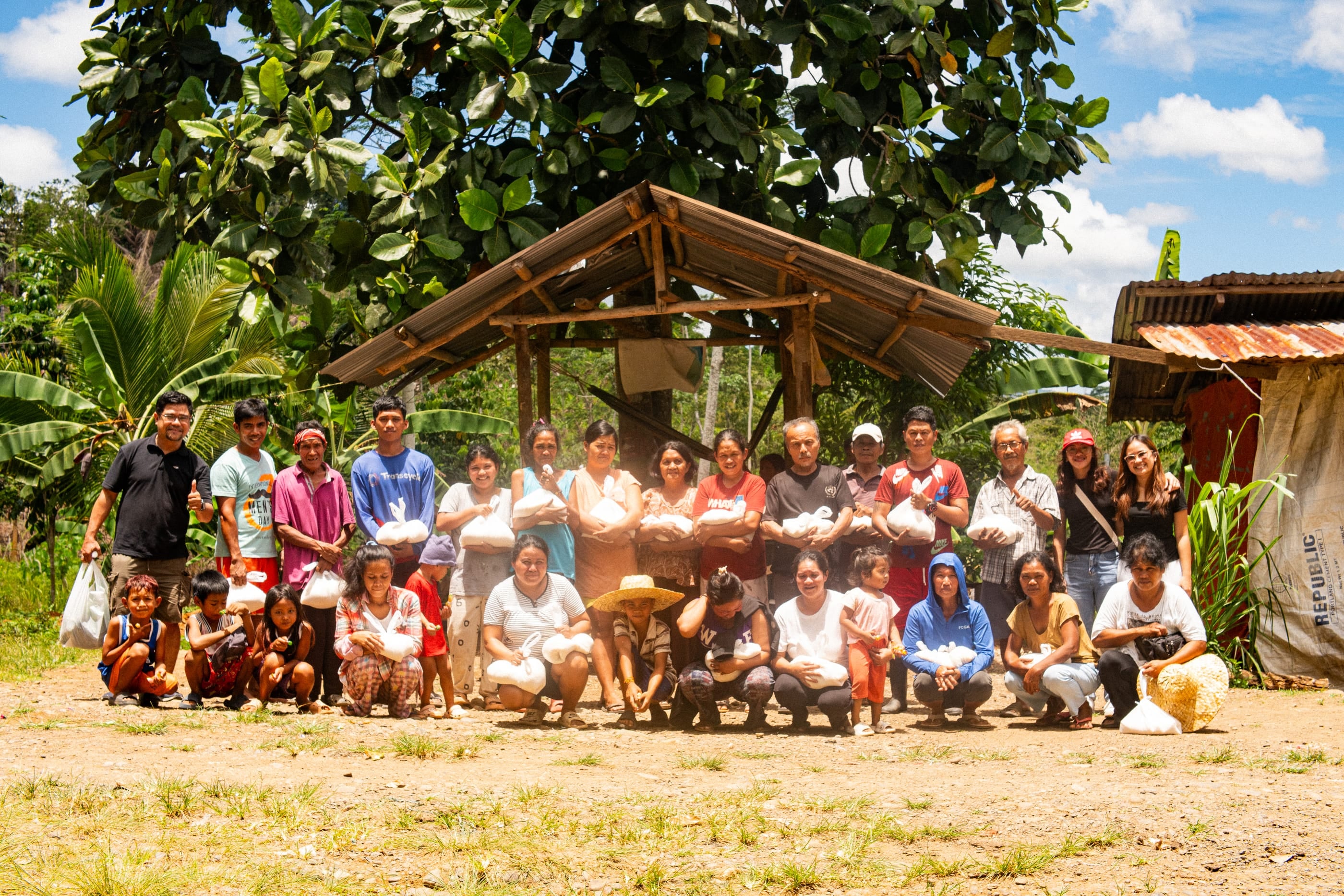
After years of ministry throughout Asia and witnessing poverty and food insecurity firsthand, Jack founded Feeding Asia to help communities move from immediate relief toward long-term food security.
Jack Jensz Jr. is an entrepreneur, a builder, and a man of deep faith who at some point stopped being able to separate his business life from his kingdom calling.
He moved to Indonesia, not as an escape, but as a positioning. To be close to the need. To make the distance between witness and action as small as possible. To give his life to this.
Feeding Asia is what happened when he stopped asking permission to respond to what he had seen.
“Proximity to suffering is not an accident. It's an assignment. When you see what Jack has seen, and you stay, that's not charity. That's obedience.”
He walked into a landfill.He never left.
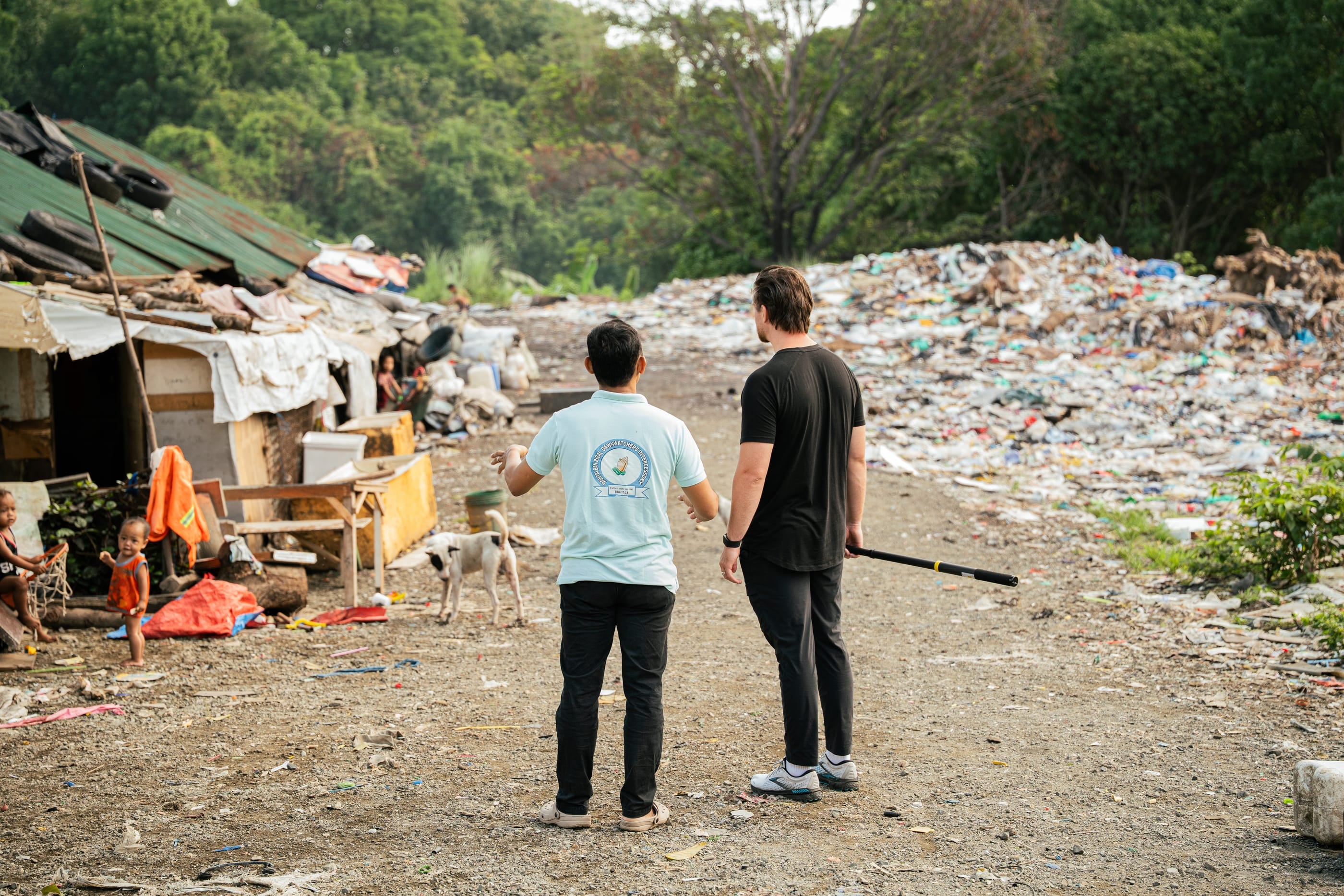
In the Payatas district of Manila, Jack stood at the edge of one of Southeast Asia’s largest informal settlements and watched children collect discarded food (pagpag) from the landfill to bring home, wash, recook, and eat.
Not once. Not in desperation. Every week. A system of survival so normalized it had a name.
He has described that moment as the day the question changed, from “what can I do?” to “what am I willing to give?”
“I watched children eating food pulled from a landfill and I thought: this is not a resource problem. This is a will problem. Someone has to decide to fix it. That someone is us.”
Kingdom business is proven by conduct,not language.
Jack’s faith is not a footnote to Feeding Asia. It is the foundation. He operates from the conviction that business built for the kingdom is the most powerful long-term engine for human flourishing the world has ever seen.
He doesn’t use kingdom language as branding. He uses it as a standard. The standard is simple: you don’t talk about what God has called you to. You build it.
Feeding Asia is what it looks like when someone builds it.
Four convictions.
On witness
Once you've been in the landfill, the makeshift home, the village where children haven't eaten, you don't get to unsee it. And once you can't unsee it, you're responsible.
On business
Business is not the enemy of mission. Done right, it is the engine of it. Feeding Asia is funded by commerce, and commerce is funded by the conviction that profit has a purpose.
On local leadership
Trusted local leaders already know the families, the needs, and the terrain. We partner with people who are already there, and stay there. The same relationships that deliver food today support a family for years.
On the mission
Ending hunger in Asia in our lifetime is not a slogan. It is a target. It requires a system, not an event. That system is what Jack came to Asia to build.
Jack moved to Asia to give his life to this. You can give $50.
Feed a family of 4–6 for a month. Every dollar traceable. Every family real.